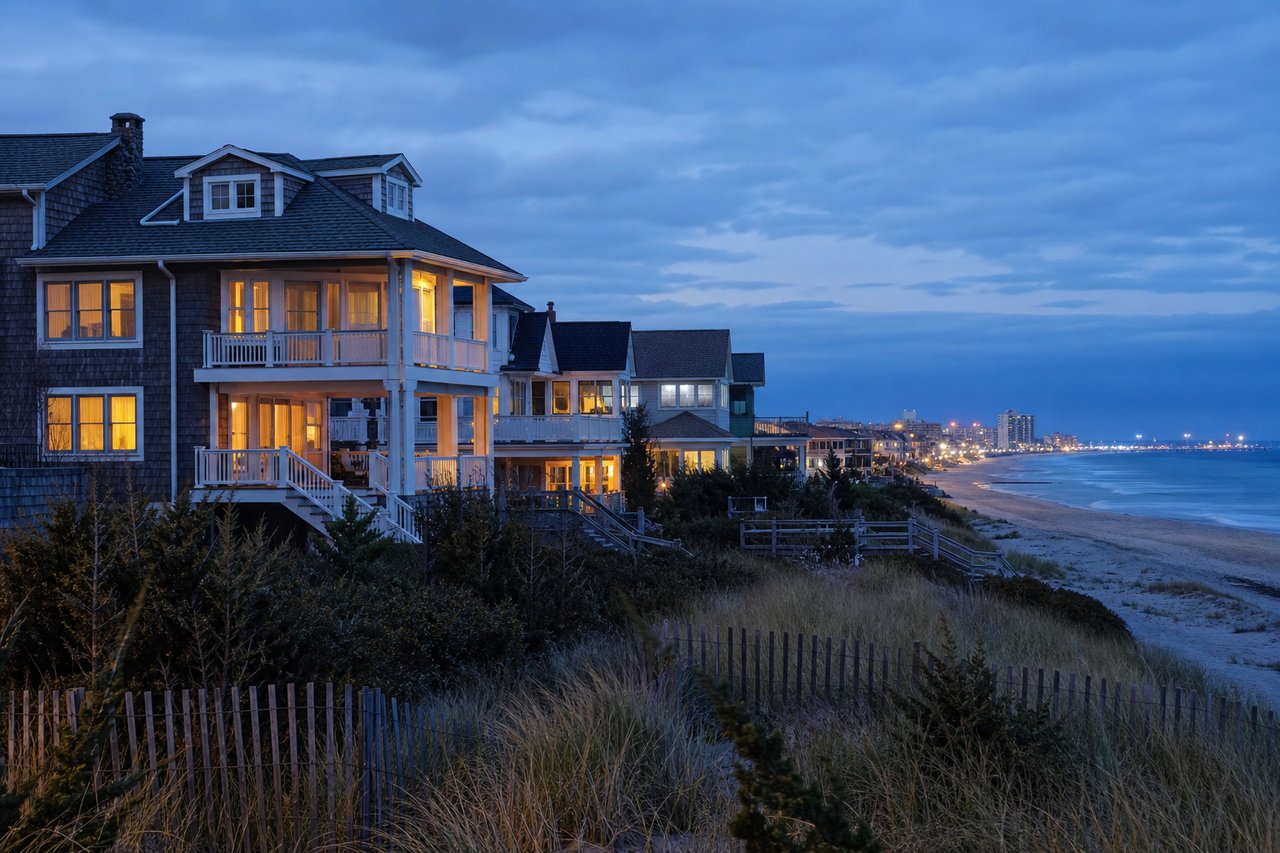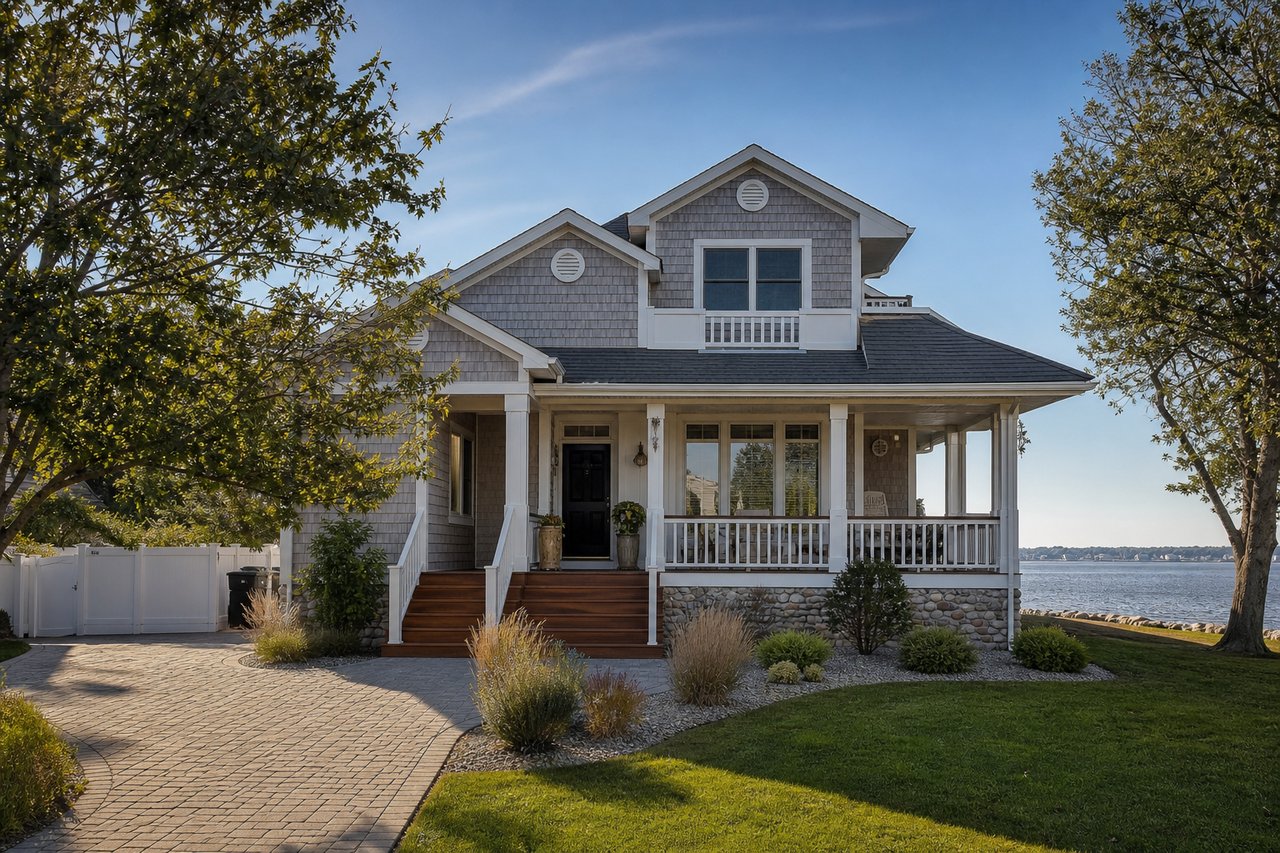
When is the best time to buy a home in the Ocean City market?
There is no single "perfect" month to buy in the Ocean City market, but timing does shape your experience and your leverage. Spring and summer attract the most buyers and move inventory quickly, while fall and winter slow the pace and can give prepared buyers more room to negotiate. The right window depends on your priorities: competition tolerance, rental-calendar goals, and how ready you are to move fast when the right property appears.
Key Takeaways
- The Ocean City market reported a median of 71 days on market and 353 active listings in September 2026, according to Realtor.com, suggesting a more measured pace heading into fall than the spring and summer peak.
- Median days on market in 2026 ranged from 19 days in April and July to 31–32 days in June and September, meaning spring buyers need financing ready before they tour.
- Months of supply ranged from 4.45 in July to 4.95 in May 2026, indicating a market that leans toward balance but tilts toward competition during peak season.
- Ocean City homes closed at 96.5%–97.6% of asking price across April–September 2026, so significant discounts are not the norm regardless of season.
- For second-home buyers with rental goals, a fall or winter closing can provide more lead time to furnish, price, and market a property before the following summer booking cycle opens.
How does the Ocean City market move through the seasons?
The Ocean City market runs on its own rhythm, and it does not look like a typical suburban market. Buyer activity picks up in late winter and accelerates hard through spring. By April and July, the median days on market was down to just 19 days in 2026, according to local South Jersey Shore market reports. That is a fast market. If you are shopping during those months, you need pre-approval in hand, proof of funds ready, and a clear ceiling on what you will spend before you walk into a showing.
By June, that pace had stretched to a 32-day median, and by September it sat at 31 days. Still not slow, but measurably different from the spring sprint. That shift matters for buyers who want time to review comparable sales, schedule thorough inspections, and negotiate without a competing offer appearing overnight.
The months-of-supply figures tell a similar story. Realtor.com's Ocean City market data reported 353 active listings in September 2026. The local reports showed months of supply ranging from 4.45 in July to 4.95 in May. Those numbers describe a market near balance, not a seller's runaway. But that balance tightens meaningfully during peak season, and loosens just enough in fall and winter to give patient buyers a bit more breathing room.
What does "faster market" actually mean for you?
A 19-day median does not mean every home sells in 19 days. It means the middle of the distribution is there. Some properties move in a weekend. Others sit for months because they are overpriced, have condition issues, or are in a location with limited demand. The median is a signal, not a guarantee either way.
What it does tell you is this: if you show up to the spring Ocean City market without financing documentation, you are going to lose properties. I have watched buyers fall in love with a home on a Saturday, take a week to get their paperwork together, and come back to find it under contract. That is not bad luck. That is the market working exactly as the data describes.
The price reality: discounts are not the norm
Here is something worth knowing before you build a strategy around waiting for a deal. Ocean City homes closed at between 96.5% and 97.6% of asking price across April through September 2026. That is a narrow band, and it holds across the season. The idea that waiting until January will unlock dramatic discounts is not supported by the data. Sellers who list in the off-season tend to be serious, and they tend to price accordingly.
That said, there is a real difference between a motivated off-season seller and a spring seller fielding multiple showings in the first weekend. The leverage is different even if the final price percentage is similar. Fewer competing buyers, more time to inspect, and a seller who has been on the market through the summer without a contract can all work in your favor. It is not about getting a steal. It is about having a real conversation instead of a bidding sprint.
According to the National Association of Realtors' research, vacation-home and second-home buyers consistently report that timing relative to their intended use matters as much as price. That tracks with what I see in Ocean City.
How does rental timing affect when you should close?
If rental income is part of your plan, the purchase calendar matters in a way it does not for a purely lifestyle purchase. The Ocean City summer rental season is the engine. Peak booking inquiries come in late winter and early spring for the following summer. If you close in March, you have a window to furnish the property, photograph it, set your rates, and get it listed on rental platforms before the best weeks are claimed.
A fall or winter closing can actually work in your favor here. You have more time to prepare without the pressure of an incoming rental season. You can take your time choosing furniture, getting any work done, and building a rental history before the following July. A buyer who closes in June has a property that is technically available for rent but is starting late in the booking cycle for that same summer.
That said, actual rental income depends on the specific property, its location on the island, IRS rules on vacation rental income, Ocean City's municipal regulations, operating costs, vacancy, and how well the property is managed. I never encourage a buyer to underwrite a purchase on assumed rental returns. The lifestyle case has to stand on its own. But if rental income is a secondary goal, timing your close to the rental calendar is a practical consideration worth building into your search.
Location within Ocean City matters more than month
The Ocean City market is not one market. The boardwalk and central beachfront area, the North End, the South End, bayfront properties, and inland blocks all behave differently. A beachfront property in a high-demand location may see multiple offers in February. A bayside condo three blocks from the water might sit through the summer at the right price.
Walkability, beach proximity, flood zone, parking, lot size, and property condition can each move a price more than the month of year. That is why I always tell buyers to focus on what the specific property is worth in the current market, not on what the citywide median is doing. If you are weighing island versus mainland options, that location question is worth its own conversation, and I cover the trade-offs in detail in my post on buying on the Ocean City island versus the mainland.
The Consumer Financial Protection Bureau's mortgage resources are a useful starting point for understanding how financing timelines intersect with purchase timing, especially for second homes where lender requirements differ from a primary residence.
Period | Median Days on Market (2026) | Months of Supply (2026) | Buyer Environment |
|---|---|---|---|
April | 19 days | Data not reported separately | Fast; financing must be ready before touring |
May | Data not reported separately | 4.95 months | Peak inventory; competitive but more choice |
June | 32 days | Data not reported separately | Pace begins to moderate slightly |
July | 19 days | 4.45 months | Fast again; lower supply, higher competition |
September | 31 days | Data not reported separately | Slower pace; 353 active listings reported |
Sources: Local South Jersey Shore market reports and Realtor.com Ocean City market data, September 2026. Figures reflect reported medians for completed transactions and should not be interpreted as guarantees for any individual property.
For buyers also thinking about the condo segment specifically, the way location affects value within that product type is worth understanding before you narrow your search. I break that down in my post on how location affects value in the Ocean City NJ condo market.
The New Jersey Realtors association publishes statewide and regional market reports that provide additional context for understanding how the shore market compares to broader New Jersey trends.
Your specific timing decision depends on your financing situation, your intended use, and the type of property you are targeting. That is where a local market analysis with someone who tracks this market week to week becomes the actual tool, not a seasonal rule of thumb.
The FEMA National Flood Insurance Program is also worth reviewing early in your search if you are considering waterfront or bayside properties, since flood insurance costs affect carrying costs regardless of when you close.
If you are also evaluating whether to sell a current home before buying, that sequencing question has its own timing implications. I walk through that decision in my post on whether to sell before you buy in Coastal Southern NJ.
The HUD local homebuying resources and Fannie Mae's guidance on second-home financing are worth bookmarking as you prepare, since second-home and vacation-home loans carry different down payment and reserve requirements than primary residence loans. Verify your specific situation with your lender.
See what other buyers and sellers say about working with me on Google, Zillow, and Realtor.com.
FAQ: Timing a Purchase in the Ocean City Market
Is Ocean City NJ cheaper to buy in the fall or winter?
Not dramatically. Ocean City homes closed at 96.5%–97.6% of asking price across the spring-through-fall period in 2026, which means sellers are not giving large discounts in any season. The off-season advantage is less competition and more time to negotiate, not a guaranteed price reduction. A motivated seller who has been on the market since summer may be more flexible, but that depends on the individual property, not the calendar.
When is the best month to buy a shore house in Ocean City NJ?
There is no universally best month. Spring offers the most inventory but the fastest pace, with median days on market dropping to 19 days in April and July 2026. Fall and winter offer a slower pace and less competition, which can benefit buyers who need more time to evaluate. The right month is the one when you are financially prepared and the right property is available.
Do Ocean City NJ home prices drop after Labor Day?
The available 2026 data does not show a reliable post-Labor Day price drop. The sale-to-list price ratio remained in a tight range through the full April–September reporting period. What does change after Labor Day is the pace and the buyer pool, both of which thin out and can give you more room to negotiate terms, inspection timelines, and contingencies even if the list price holds firm.
Should I wait until the off-season to make an offer on an Ocean City vacation home?
It depends on your priorities. If you want less competition and more time to think, fall and winter are worth considering. If you want the widest selection of available properties, spring typically offers more active listings. Waiting for the off-season is a reasonable strategy if you are flexible on which property you buy; it is a risky one if you have your heart set on a specific neighborhood or property type that rarely comes to market.
How does seasonal rental demand affect the timing of an Ocean City home purchase?
A fall or winter closing gives you the most lead time to prepare a property for the following summer rental season, when peak booking inquiries typically come in during late winter and early spring. A closing after June puts you late in the booking cycle for that same summer. Actual rental income depends on the property, its location, Ocean City's municipal rules, operating costs, and management strategy, so no specific return should be assumed from timing alone.
Timing a purchase in the Ocean City market is less about finding a magic month and more about being prepared when the right property appears. I walk every buyer I work with through the current pace of the market, what their financing needs to look like before we tour, and how their intended use should shape their timing strategy.
If you are ready to think through when and where to buy, reach out directly at [email protected]. And if you want a feel for the communities and lifestyle before you commit to a search, watch Saltwater Living on the ADTV Network at youtube.com/@ChristopherOlivaOceanCityNJ.
Equal Housing Opportunity. Christopher Oliva is licensed in New Jersey as a Broker/Salesperson (NJREC). This article is general market information only and does not constitute legal, tax, or financial advice. Confirm all figures, costs, and financing details with your title company, tax advisor, or lender.