Ocean City Bayfront Home Checklist for Buyers
What should you check before choosing an Ocean City bayfront home?
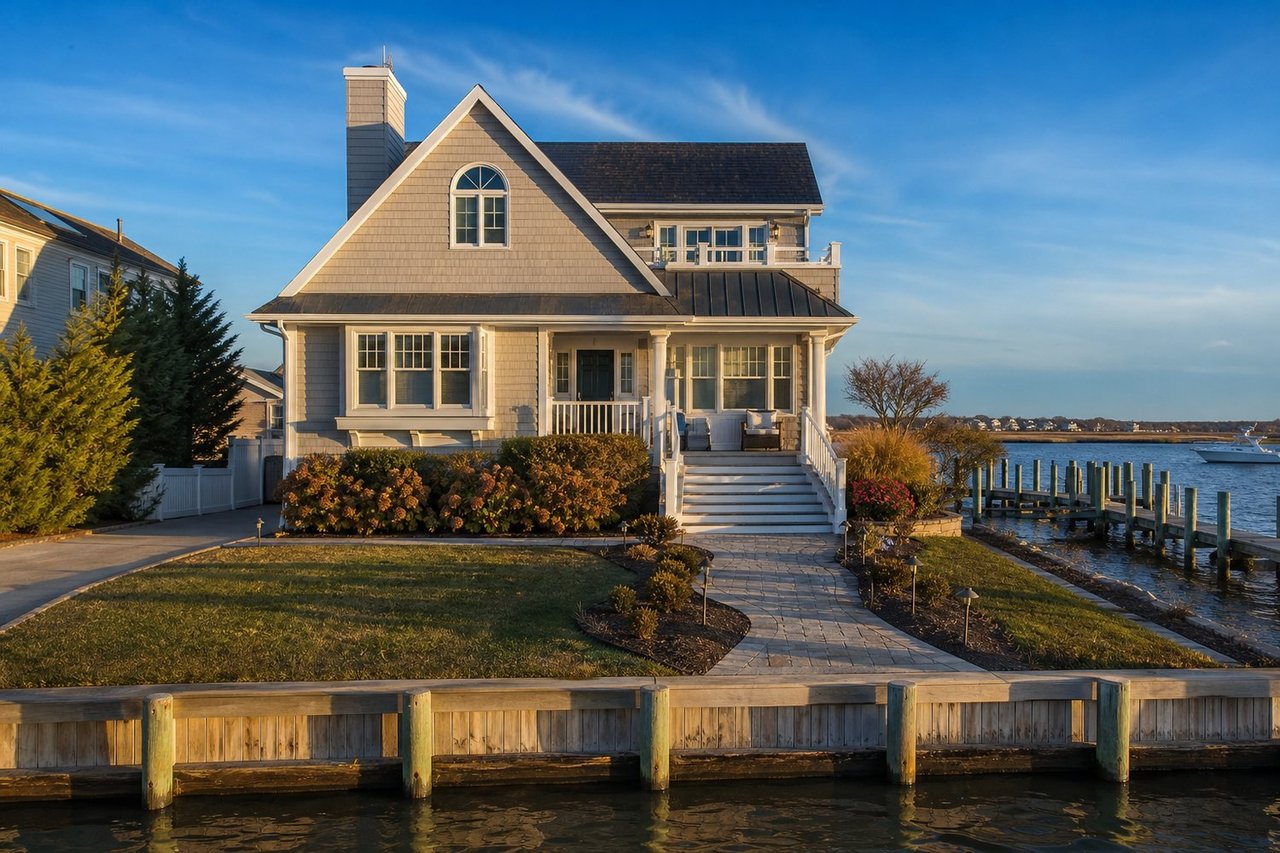
Check the home's flood exposure by exact address, confirm what water access it actually conveys (dock, bulkhead, or just shoreline), and see the property at more than one tide. An Ocean City bayfront home can look identical to its neighbor in a listing photo and still differ on elevation, water depth, and the route out during high water. The label "bayfront" tells you very little until those details are verified.
Key Takeaways
- Ocean City sits entirely within a floodplain, so every bayfront property deserves its own address-level flood review rather than a neighborhood-level assumption.
- Ocean City publishes elevation certificates by block and lot, which lets you compare a structure's elevation against applicable flood levels before you make an offer.
- Bayfront water access is not automatically unrestricted, because New Jersey requires some form of authorization for docks and piers in regulated areas.
- A broad bay view does not guarantee usable boating access, so water depth, wakes, and shoreline condition should be checked at both high and low tide.
- The lower level (garage, crawlspace, mechanicals, electrical panel) is where bayfront inspection findings tend to matter most.
How Do You Check Whether an Ocean City Bayfront Home Floods?
Start with the home's exact address and block and lot, then review the FEMA flood map, the city's elevation certificate records, and Ocean City's tide-based flooding resources. No single source tells the whole story, so you use them together.
Start with the floodplain reality
The City of Ocean City states that the entire city is within a floodplain, and that flooding can come from both ocean and bay waters during hurricanes and high-tide storms. Lesser flooding is possible during lunar high tides and rainstorms. That means the question for a bayfront buyer is not whether flooding is possible. It's how a specific home, lot, and street handle it.
Use the address-specific records
FEMA identifies its Flood Map Service Center as the official public source for flood-hazard information used by the National Flood Insurance Program. Look up the property by address rather than relying on a listing description or a neighborhood nickname.
Then check the city's elevation certificate records, which are organized by block and lot. This is one of the most useful tools you have, because it lets you compare a structure's elevation with the applicable flood levels. Ocean City also points residents to flood-elevation information, tidal flooding heights, and flood insurance rate maps in one place.
Look at the street, not just the house
A home can sit well while the street in front of it does not. Ocean City's emergency management page includes a live tide chart, predicted flood levels, and maps of projected street flooding at different tide heights. The city is clear that tide-based maps don't account for every factor that can contribute to flooding, so treat them as one input.
Ask yourself a practical question: if the water is up, how do you get from the front door to higher or less flood-prone streets? Parking, outdoor storage, and the access route all belong in that answer.
Inspect the lower level closely
When I walk a bayfront home with a buyer, the lower level gets the most attention. These are the areas to examine, with your inspector, before you commit:
- Crawlspaces, garages, and enclosed ground-level areas
- Mechanical equipment, electrical panels, and water heaters (where they sit relative to the lowest floor)
- Drainage outlets and flood vents
- Corrosion, mold indicators, and any evidence of prior water entry
Keep the elevation certificate, FEMA map information, repair history if available, and details on the lowest floor and mechanical systems together. You'll want them handy when you speak with an insurance professional and your lender, because flood-insurance requirements should be confirmed for each address and not assumed from the home next door.
Quick reference: where to verify what
What to verify | What it tells you | Where to look |
|---|---|---|
Official flood map | The address-specific flood-hazard information used by the National Flood Insurance Program | |
Elevation certificate | The structure's elevation compared with applicable flood levels | |
Tide and street flooding | Predicted flood levels and projected street flooding at different tide heights | |
Dock, pier, or bulkhead authorization | Whether existing structures have the approvals they need | |
Lower-level condition | Signs of prior water entry, corrosion, and equipment placement | Your home inspection |
What Does Water Access Actually Include on a Bayfront Property?
It includes only what the property legally conveys and what the water and shoreline physically allow. A home can have a wide bay view and still offer little practical access, so confirm both the paperwork and the conditions.
Confirm what the property conveys
Is there a dock, pier, lift, bulkhead, mooring arrangement, or only shoreline? Don't leave that to the listing description. Ask for available permits, approvals, surveys, maintenance records, and repair invoices.
New Jersey states that building docks or piers in regulated areas requires some form of authorization. Depending on the project, that could mean a permit-by-rule, a coastal approval, a flood-hazard approval, or an individual permit. The same NJDEP page describes separate regulatory pathways for certain docks, piers, boathouses, bulkheads, and related water-dependent structures. The takeaway for you is simple. Don't assume an existing structure can be replaced, expanded, or rebuilt under the same conditions. If the dock is part of why you want the property, confirm its authorization status before you rely on it.
Test the water, not just the view
A broad bay view and navigable boating access are two different things. A shoreline may be shallow, muddy at low tide, obstructed by vegetation, exposed to wakes, or difficult to reach safely from the house. Look at usable water depth and access at both high and low tide, and compare:
- Dock or ladder access, and how far you walk to reach it
- Bulkhead condition and any recent repair records
- Exposure to boat wakes and prevailing wind
- Where a kayak, paddleboard, or boat would realistically be stored
For the bulkhead itself, have your inspector and, where warranted, a qualified marine contractor evaluate it. Waterfront structures are a maintenance item you take on with the house, so understanding their condition and paper trail up front keeps surprises out of the first season.
See it at more than one moment
Showings tend to happen on calm, dry days. That is the easiest version of the property. The city's own materials separate ordinary tide conditions from predicted flood levels and storm-related effects, so where you can, see the home and the surrounding streets under different tide conditions. In-season activity is its own test: boating traffic, wakes, noise, and congestion are clearest when the summer crowd is on the water. If you're shopping outside the summer months, ask to revisit once that activity picks up. A separate look during a high tide or heavy rain can also reveal drainage and access issues that a dry-weather showing hides.
Which Ocean City Bayfront Home Fits the Shore Routine You Want?
The right one is the home whose orientation, layout, and upkeep match how you plan to spend your days at the shore. I'd rather you picture your actual routine (coffee on the deck, an evening paddle, guests arriving on a holiday weekend) than chase a feature list.
Compare views, sun, and privacy deliberately
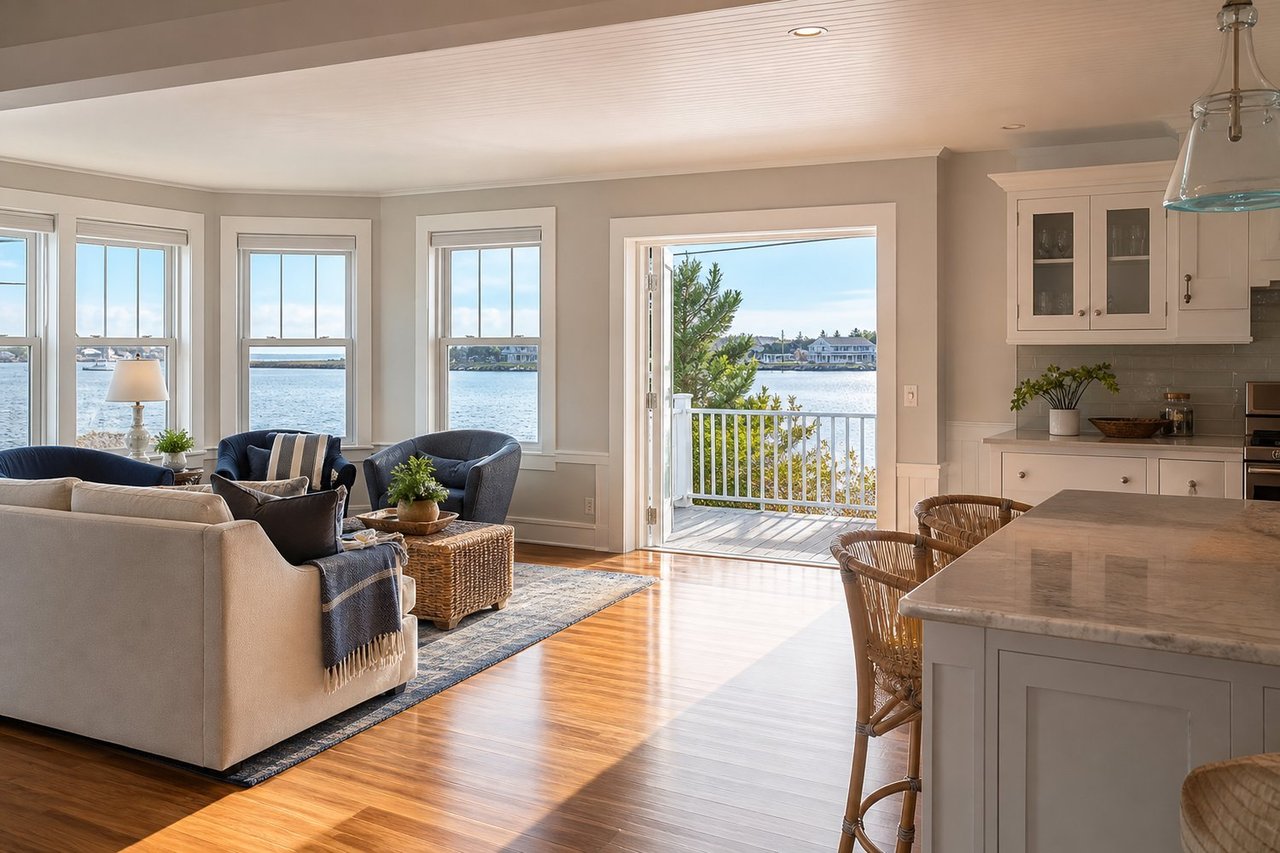
Bayfront homes can differ a lot in sightlines, sun orientation, and how close the neighbors feel. Walk the deck or back yard at the time of day you'd use it most. Notice where the sun sits, how the prevailing wind feels, and what you see from the main living area versus the water's edge. Sunsets over the bay are a common draw, but the angle depends on the lot.
Think through layout and day-to-day upkeep
Layout matters more on the water than buyers expect. Consider where guests park, where gear gets rinsed and stored, how you move from the living space to the dock, and how much of the home's usable space sits at ground level versus above it. Salt air and moisture add upkeep, which is another reason the lower-level and waterfront-structure checks above matter.
Weigh the bay side against the other options
The bay gives you a different relationship with the water than the ocean side does: calmer scenery, boating-oriented living, and a different kind of sunset. In a vacation-home market, fit with the life you want matters far more than chasing the lowest price. If you're still deciding where on the map to look, my post on bayfront living in Ocean City covers the broader lifestyle picture, and this comparison of buying on the island versus the mainland helps if location is still open. For a wider view of the category, see why buyers choose Ocean City waterfront homes.
In my experience, the best bayfront choice depends less on the word "bayfront" than on the specific relationship between the house, the shoreline, the water depth, the dock or bulkhead, the elevation, and the route in and out. The city's own flood-smart materials make the same point: conditions differ by tide, storm, rain, and location. Running those variables across two or three homes you like is exactly where a local walk-through earns its keep.
If you'd like to hear what other clients say about working with me, you can read my reviews on Google, Zillow, and Realtor.com.
FAQ
How is a bayfront home in Ocean City different from an ocean-side home?
A bayfront home faces the back-bay waters instead of the open ocean, which changes the views, the boating options, and the kind of water-related maintenance you'll manage. Flooding can come from both bay and ocean waters in Ocean City, so elevation and access still need to be checked property by property. Start with the address-specific FEMA map and the city's elevation certificate records.
Can I keep a boat or kayak at an Ocean City bayfront property?
It depends on what the specific property conveys and what the water allows. Some homes have a dock or bulkhead access, while others offer only shoreline. Confirm the structures, their authorization history, and the usable water depth at high and low tide before you count on boating.
What should I look for in a bulkhead, dock, or seawall?
Look for the paper trail and the physical condition. Ask for permits, approvals, surveys, maintenance records, and repair invoices, then have your inspector (and a qualified marine contractor where appropriate) evaluate the structure. NJDEP regulates many dock, pier, and bulkhead activities, so a structure's authorization status matters as much as how it looks.
Does every Ocean City bayfront property have the same flood-insurance requirements?
No, you shouldn't assume that. Flood-hazard information is address-specific, and a structure's elevation and lowest floor can affect the conversation. Gather the FEMA map information and elevation certificate, and confirm requirements and options with your lender and an insurance professional before you finalize your decision.
Can I rebuild or enlarge an existing dock or bulkhead in New Jersey?
Not automatically. New Jersey requires some form of authorization for docks and piers in regulated areas, and the pathway depends on the project, which could involve a permit-by-rule, coastal or flood-hazard approvals, or an individual permit. Confirm with NJDEP and the property's records before assuming an existing structure can be replaced or expanded.
Bringing It Together
Choosing a bayfront home well comes down to verifying elevation, access, and structures property by property, then matching what's left to the shore routine you want. If you're weighing specific homes, I'll walk each one with you, pull the records, and help you compare them side by side. You can contact me at [email protected], or watch the show to see more of the Ocean City market. For a broader look at buying here, start with what buyers should know about Ocean City vacation homes.
Equal Housing Opportunity. Christopher Oliva, Broker/Salesperson, licensed in New Jersey and regulated by the New Jersey Real Estate Commission (NJREC). This article is general information, not legal, tax, or financial advice; confirm your own flood, insurance, and closing details with your title company, tax advisor, or lender.