{ "title": "Ocean City Waterfront Home Flood Quote Before You Buy", "slug": "ocean-city-waterfront-home-flood-quote", "answer_capsule": "The real decision is timing. Request an address-specific flood quote once you're serious about a property, and well before your inspection and financing deadlines pass, so the premium, deductible, and coverage limits are known when you decide whether to move forward or renegotiate.", "content_html": "
Should you get a flood insurance quote before buying an Ocean City waterfront home?
Yes. Get a written flood insurance quote on any Ocean City waterfront home before your inspection and financing contingencies expire, because the premium and coverage depend on the specific address, elevation, and construction, not on the flood-zone label alone. The quote shows the annual premium, deductible, and limits you would actually carry, and whether federal limits are enough for the house. It turns a guess into a figure you can weigh against the rest of your ownership costs.
Key Takeaways
- Standard homeowners insurance generally does not cover flood damage, so flood coverage is a separate policy and a separate line in your ownership budget.
- NFIP residential coverage is capped at $250,000 for the building and $100,000 for household contents, which can fall short on a higher-value waterfront home.
- A flood-zone label does not set your premium, because FEMA's Risk Rating 2.0 prices each property's individual flood risk and replacement-cost factors.
- Ocean City ties flood insurance rates to the building's lowest-floor elevation, and homes below the applicable base-flood elevation can face higher premiums.
- A federally backed mortgage can make flood insurance mandatory, and a cash buyer can still choose to carry it.
Why get a flood quote before you commit to a waterfront purchase?
Because flood insurance is its own policy with its own price, and you want to know that price while you still have options under your contract. New Jersey's Department of Banking and Insurance states that flood insurance is separate coverage and is generally what protects a home and personal property from flood damage. A standard homeowners policy will not fill that gap.
When I walk my clients through a waterfront offer, the flood quote sits right beside the inspection report and the mortgage estimate. All three change the monthly picture of what the house costs to own, and the quote is the one buyers most often leave until too late.
Is flood insurance required if you have a mortgage or pay cash?
It is required when your lender is federally backed and the building sits in a qualifying flood-risk area. Ocean City explains that the lender makes that determination during the mortgage process. If you pay cash, no lender is requiring it, but you can still choose to carry coverage, and I'd want you to make that choice with a real quote in hand.
Does the flood zone label set your premium?
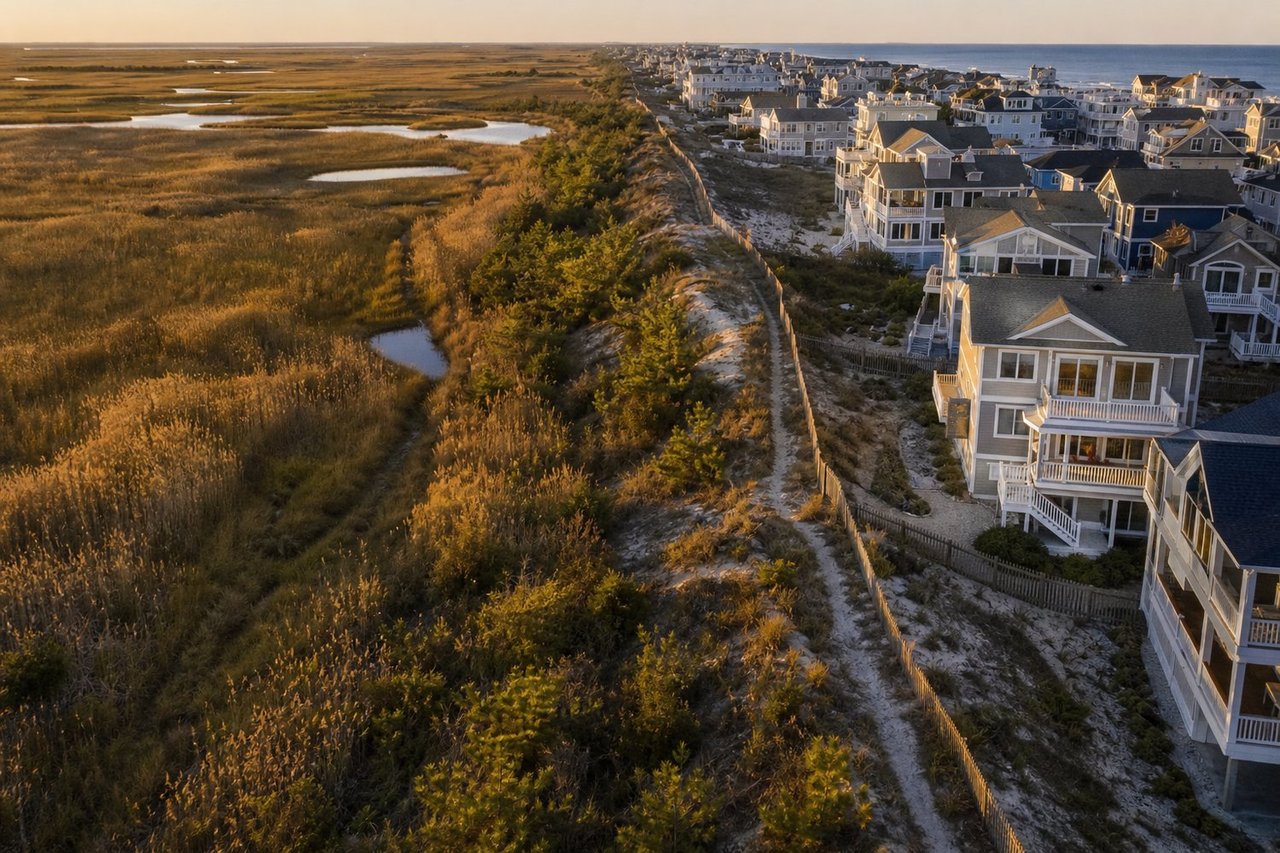
No. FEMA's Risk Rating 2.0 approach looks at the property's individual flood risk and replacement-cost-related factors instead of relying only on the former zone-based method. Ocean City's own flood hazards and maps page treats the island as a floodplain community and points you to address-specific map information.
Think of the zone as a screening tool. It tells you where to start looking, not what you will pay. Two homes on the same stretch of the island can quote differently once elevation, construction, and replacement cost enter the picture.
What do you need to get an accurate quote on an Ocean City waterfront home?
You need the exact property address plus the details an insurer uses to rate the building. The more complete the information, the more reliable the quote. Here is what to gather:
- The property address and its FEMA flood-map location
- Elevation information, including any elevation certificate
- Construction details, such as foundation type, enclosed lower levels, and utilities
- Replacement-cost data for the home
- The building and contents limits you want
- The deductible you're considering
If you're looking on the bay side, my Ocean City bayfront home checklist for buyers is a good companion to this process.
How do you find an elevation certificate in Ocean City?
Use the city's online lookup. The Ocean City elevation certificate resource lets you locate available certificates by selecting the property's block and lot. Compare the lowest-floor information on the certificate with the applicable base-flood elevation, then ask the insurer whether that document is usable for current underwriting.
Whether a certificate lowers your quote depends on what it shows. Ocean City says rates depend on the lowest-floor elevation, and its home elevation FAQs warn that homes remaining below the applicable base-flood elevation can face higher premiums. Let the quote answer that question for the specific house.
Does a newly elevated or renovated house mean a cheaper quote?
Not automatically. Ask the insurer to evaluate the current structure, including the lowest floor, utilities, foundation, enclosure, prior-loss history, replacement cost, and elevation documentation. Recent work is a reason to ask, not a reason to assume.
This comes up often when buyers compare older homes with new builds. I break down that trade-off in Is Ocean City Island New Construction Worth the Premium?, and the insurance quote belongs in that comparison.
How do you compare NFIP and private flood quotes for an Ocean City waterfront home?
Compare the full terms of each quote, not just the premium. Ocean City participates in the National Flood Insurance Program, and the city notes that residential NFIP limits are capped at $250,000 for the building and $100,000 for contents. On a higher-value waterfront home, those limits may not match the replacement cost, so ask whether private or excess flood coverage is needed.
New Jersey's DOBI identifies both the NFIP and private insurers as sources of flood insurance. Private policies can differ in limits, exclusions, deductibles, waiting periods, additional living expense coverage, replacement-cost treatment, and coverage for basements or below-grade improvements. Verify every one of those terms in the actual quote and policy.
What to compare | NFIP | Private flood quote |
|---|---|---|
Residential building limit | Capped at $250,000 | Set by the insurer; confirm in the written quote |
Contents limit | Capped at $100,000 | Set by the insurer; confirm in the written quote |
How the price is built | FEMA Risk Rating 2.0, using individual property risk | The insurer's own underwriting; compare actual quotes |
Basement or below-grade improvements | Verify treatment in the policy | May differ; verify in the policy |
Deductible and waiting period | Verify in the quote | May differ; verify in the quote |
Additional living expense | Verify in the policy | May differ; verify in the policy |
What waterfront features should you ask about in writing?
Ask about every feature that makes a waterfront home what it is. Docks, bulkheads, seawalls, pilings, detached structures, enclosed lower levels, crawl spaces, mechanical equipment, decks, and improvements below the elevated living area may be excluded, limited, or covered differently depending on the policy. Get the answer in writing before you rely on the quote.
How does your intended use change the quote?
It can change underwriting, occupancy, contents, and loss-of-use considerations. A primary residence, a seasonal home, a short-term rental, and an investment property are not rated the same way, so confirm that your planned use is permitted under the policy. Most buyers I work with in Ocean City are buying a lifestyle, not counting on rental income, but if you plan to rent even occasionally, say so when you request the quote. My post on what buyers should know about Ocean City vacation homes covers the wider picture.
Who needs the quote, and when?
Request it early enough to compare the annual premium, deductible, limits, exclusions, waiting period, and lender requirements before your inspection and financing contingencies expire. If you change the deductible, coverage limits, occupancy, or financing structure, re-quote. Your lender determines whether federally required flood insurance applies to the loan. The title company coordinates closing documents but does not set your premium, so send the insurance declarations and any lender-required coverage information to the right parties before closing.
Every property is different, and the only way to know your number is to run it for the address you're buying. A waterfront purchase should start with the life you want at the shore, and then we confirm the ownership costs fit that picture. If you're weighing an Ocean City waterfront home, I'll help you sequence the quote, the inspection, and the financing so nothing surprises you at the table.
If you'd like to see how past clients describe working with me, you can read my reviews on Google, Zillow, and Realtor.com.
Frequently Asked Questions
Do I need flood insurance for an Ocean City waterfront home?
You need it if your lender is federally backed and the building sits in a qualifying flood-risk area. Otherwise it is your choice, and a standard homeowners policy generally does not cover flood damage. Even without a requirement, I'd want you to see a real quote before deciding to skip it.
How much does flood insurance cost in Ocean City, NJ, in 2026?
It depends on the individual property, so the only reliable figure is a written quote for the address you're buying. Premiums turn on elevation, construction, replacement cost, coverage limits, and deductible, which is why a number from a blog or a zone label isn't your number. Record the quote date and policy terms so you can compare quotes fairly.
Does being in Zone AE or Zone VE automatically determine my flood-insurance premium?
No. A zone label is a screening tool, not a quote. FEMA's