How much cash do you actually need to buy a house in coastal Southern New Jersey?
Buying a home in coastal Southern New Jersey means budgeting for more than just the down payment. Buyers in Cape May and Atlantic County typically need to cover a down payment, lender and title company closing costs, inspections, prepaid taxes and insurance, and lender-required cash reserves, and in this market, where the New Jersey Association of REALTORS® reports a 2026 Cape May County median sale price around $650,000, those layers add up fast. If you're buying above $1 million, a separate buyer-side fee under New Jersey's Realty Transfer Fee statute also applies.
Key Takeaways
- The 2026 Cape May County median sale price is approximately $650,000, with a separate deed-recording-based analysis through July 2026 placing it closer to $682,667, well above the statewide norm.
- Atlantic County's 2026 median sale price ranges from roughly $418,000 to $440,000 depending on the data source, making it a more accessible entry point for shore-area buyers.
- New Jersey's Realty Transfer Fee is a seller-side statutory cost by default, but buyers purchasing properties above $1 million owe a separate 1% buyer-side fee under state law.
- Second-home and vacation-property loans, the most common purchase type in Ocean City, Avalon, Stone Harbor, and similar shore towns, often carry higher down-payment and reserve requirements than primary-residence loans.
- Your total cash to close is the sum of five categories: down payment, closing costs, inspections, prepaids, and reserves, and every one of them scales with purchase price and loan type.
What are the five cost categories every shore buyer needs to plan for?
Every buyer in Cape May and Atlantic County needs to budget across five buckets. None of these is optional, and they stack on top of each other, which is why the number on your Closing Disclosure almost always surprises first-time buyers who only planned for the down payment.
Down payment: the biggest variable in your budget
Your down payment is driven by loan type, occupancy status, and lender guidelines, not by New Jersey law. A primary-residence conventional loan can require as little as 3% to 5% down for qualified buyers, while FHA loans have their own minimums. But here's the catch most shore buyers don't see coming: second-home and vacation-property loans typically carry higher down-payment requirements than primary-residence financing. Since the overwhelming majority of purchases in Ocean City, Avalon, Stone Harbor, and similar barrier-island towns are classified as second homes, you'll want to confirm the exact requirement with your lender before you start shopping at a specific price point.
Jumbo loans, which kick in once you exceed the conforming loan limit, are common in Cape May County given the price levels there. Jumbo guidelines vary by lender and often require more equity at closing than conventional products. If you're targeting a home in the $800,000-to-$1.2 million range, run the numbers with a lender who actively works this market before you make an offer.
The CFPB's homebuying resource center is a solid starting point for understanding how loan type affects your down payment, but the specific number for your situation requires a real conversation with a lender.
Buyer closing costs: title, lender, and everything in between
Closing costs in New Jersey are handled through a title company, which coordinates settlement, issues title insurance policies, and records the deed and mortgage with the county clerk. Your closing costs as a buyer will typically include several distinct categories.
Title company charges cover the title search, lender's title insurance policy, owner's title insurance policy (strongly recommended), the settlement/escrow fee, and coordination of deed and mortgage recording with the Cape May County Clerk or Atlantic County Clerk.
Lender fees appear on your Loan Estimate and later your Closing Disclosure and include origination, underwriting, appraisal, and credit report charges. These vary by lender and loan program, so comparing Loan Estimates across at least two lenders is worth the effort.
Attorney fees are common in New Jersey, each party retaining counsel pays their own. This is separate from the title company's fee and is a real line item in your budget.
Recording charges are set by the county recording offices. Buyers pay to record the mortgage; deed recording is tied to the seller's Realty Transfer Fee obligation. Per the New Jersey Division of Taxation's official home-buying guide, the Realty Transfer Fee is imposed on the seller when title transfers by deed, it is not a buyer cost in the standard transaction. The one exception: if your purchase price exceeds $1 million, New Jersey law imposes a separate 1% fee on the buyer for qualifying property types. That's a meaningful line item on a $1.2 million Cape May city purchase, and it's one I make sure my clients are aware of before they're sitting at the closing table.
Inspections: don't skip these on a coastal property
Inspections are paid out of pocket before closing and are almost always non-refundable, but they're essential, especially on older shore properties. A standard general home inspection covers structural, mechanical, and safety systems. Beyond that, I strongly encourage buyers in this market to budget for a termite and wood-destroying insect (WDI) inspection, which is standard practice in New Jersey and especially important in coastal and older housing stock.
Properties in outlying parts of Cape May County not connected to public water and sewer will need septic and well inspections. Older seaside structures may warrant mold, foundation, or specialized assessments. A pool inspection is worth adding if the property has one. None of these are set by statute, but skipping them on a beach house is a risk I wouldn't take. If the inspection uncovers issues, those findings can inform renegotiation, which is one of the most valuable moments in the whole transaction.
If you're considering a waterfront property specifically, my post on buying waterfront property in Somers Point covers some of the additional due-diligence layers worth knowing.
Prepaids: the costs most buyers forget to plan for
Prepaids are real costs that show up on your Closing Disclosure and need to be funded at closing. They're not fees for services rendered, they're money you're putting into escrow or paying ahead of time.
Property taxes: if you have a mortgage, your lender will require an escrow account funded with several months of property taxes. Tax levels in Cape May and Atlantic County vary considerably by municipality, proximity to the shore, and assessed value, your specific number comes from the municipal tax office, not from a general estimate. The New Jersey Division of Taxation guide explains how property taxes work in the context of a home purchase.
Homeowners insurance: you'll typically pay the first year's premium at closing and fund monthly escrow reserves going forward. Coastal properties in Cape May and Atlantic County often carry higher premiums due to wind and flood exposure. If the property sits in a FEMA flood zone, which many shore-area homes do, separate flood insurance is likely required by your lender. The FEMA National Flood Insurance Program is the starting point for understanding flood coverage requirements.
Prepaid interest: the portion of mortgage interest from your closing date through the end of that month. On a higher-balance loan, this can be a few hundred to over a thousand dollars depending on when in the month you close.
Reserves: the cash you keep after closing
Reserves are funds your lender requires you to have available after closing, not money you spend at closing, but money you must demonstrate you have. For second-home and investment-property loans, which are the norm in shore towns like Ocean City, Avalon, Margate, and Stone Harbor, reserve requirements are typically higher than for primary-residence loans. Fannie Mae's second-home guidelines give lenders the framework they work from, but your specific reserve requirement will be spelled out in your Loan Estimate.
Reserves don't disappear into the transaction, they stay in your account, but they do affect how much total cash you need to have available when you close. A buyer who plans only for the down payment and closing costs and doesn't account for reserves can find themselves short at a critical moment.
How does purchase price change the total picture in Cape May and Atlantic County?
Price tier matters enormously here, and the range across our two counties is wide. The most recent data from the New Jersey Association of REALTORS® Atlantic County market report puts the 2026 county-wide median in the $429,000 to $440,000 range. Redfin's Atlantic County market data for the most recent three-month period through late summer 2026 shows a median closer to $418,000, up about 2% year-over-year.
Cape May County is a different conversation. The NJAR Cape May County report puts the 2026 median around $650,000. A deed-recording analysis through July 2026 from TopHap places it at approximately $682,667, up more than 12% year-over-year. And within Cape May County, the city of Cape May itself is a market unto its own: a Resideline analysis of 122 closed sales in Cape May city over the prior 12 months through August 2026 found a median closing price of roughly $1.3 million.
The long-term appreciation context is striking. The Federal Reserve Bank of St. Louis All-Transactions House Price Index for Cape May County recorded a 2025 index value of 394.60 (with 2000 as the base year of 100), meaning prices are nearly four times their year-2000 levels. That's the market you're entering.
Here's a simplified look at how the five cost categories scale across three common purchase-price scenarios in this market:
Cost Category | ~$400K Atlantic County Home | ~$650K Cape May County Home | ~$1.2M Cape May City Shore Home |
|---|---|---|---|
Down Payment | Varies by loan type and occupancy; second-home loans typically require more than primary-residence loans | Same framework; jumbo loan territory likely; higher minimum common | Jumbo or portfolio loan likely; higher equity requirement; confirm with lender |
Buyer Closing Costs (title, lender, attorney, recording) | Multiple categories stack; scales with loan size and title value | Higher title insurance premiums and lender fees on larger loan balance | Highest tier; owner's title insurance premium is significant at this price |
Inspections | General, WDI, possibly septic/well; budget for multiple | Same; older coastal structures may need additional specialized inspections | Same categories plus potential pool, foundation, or structural assessments |
Prepaids (taxes, insurance, prepaid interest) | Escrow funding scales with tax rate and insurance premium; flood zone status matters | Higher taxes and insurance premiums in shore-adjacent areas; flood insurance likely | Largest escrow funding requirement; wind and flood premiums can be substantial |
NJ Buyer Transfer Fee | Not applicable below $1M (seller pays RTF) | Not applicable below $1M (seller pays RTF) | 1% buyer-side fee applies on qualifying purchases over $1M per NJ law |
Lender-Required Reserves | Months of PITI held in reserve; higher for second-home loans | Higher reserve requirement on larger balance second-home loan | Largest reserve requirement; must be available after closing, not spent |
Every number in your actual Closing Disclosure will be specific to your property, your lender, your loan type, and the terms you negotiate. The table above shows the structure, your lender and title company will fill in the real figures once you have a property under contract.
One thing I tell buyers who are comparing shore towns: the barrier-island market moves on its own seasonal rhythm, and knowing when to act can affect both what you pay and how much negotiating room you have on things like seller credits toward closing costs. That timing conversation is worth having before you start making offers.
Can you ask the seller to contribute toward your closing costs? Yes, seller concessions are negotiable in Cape May and Atlantic County, and in some market conditions they're achievable. Whether a given seller will agree depends on how competitive the listing is, the price tier, and the time of year. I work through that calculus with my buyers on every transaction, it's one of the places where local market knowledge directly affects your out-of-pocket number.
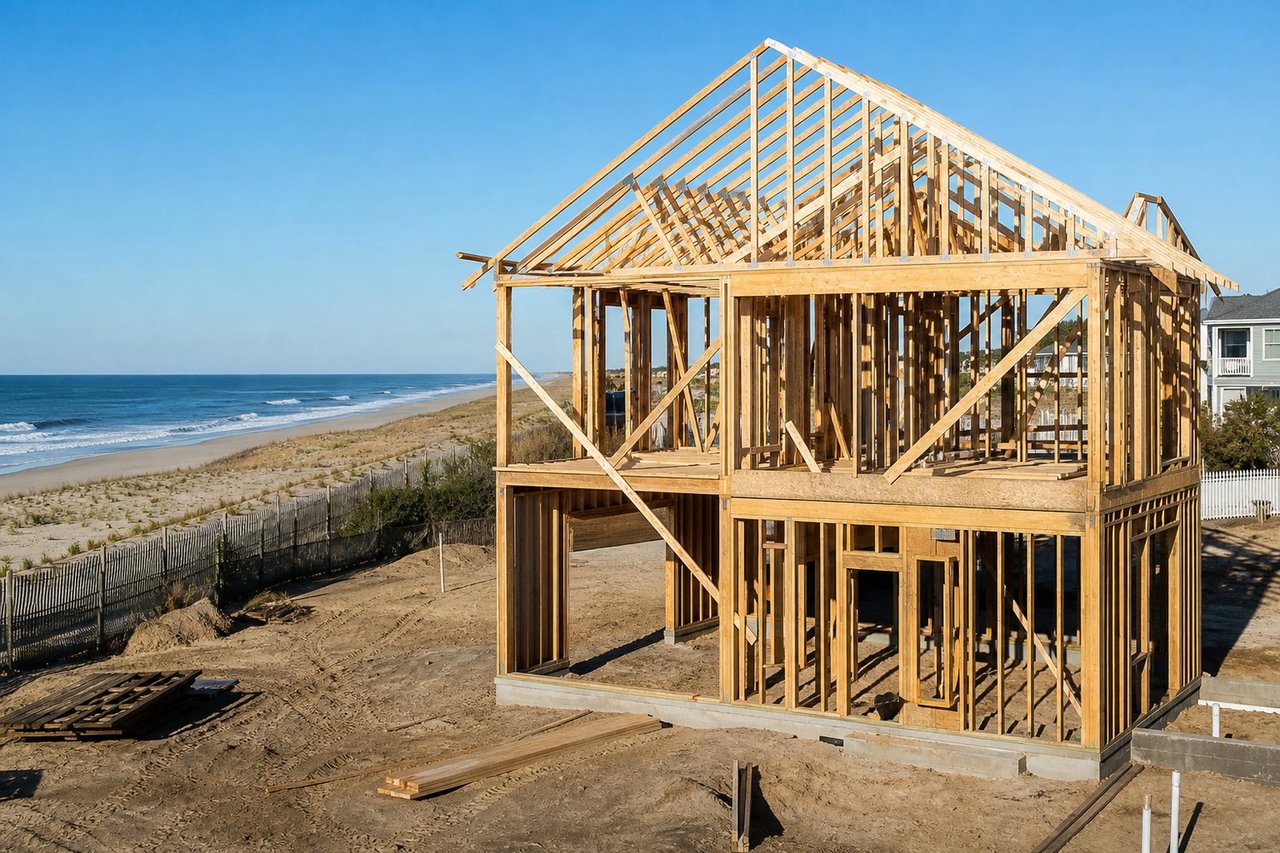
If you're also weighing whether to buy an existing home or go the new-construction route, my post on new construction at the Jersey Shore breaks down what's different about that process and cost structure.
To see how Christopher and the Saltwater Living Team approach buyer representation across Cape May and Atlantic County, you can read reviews on Google, Zillow, and Realtor.com.
FAQ
How much cash do I really need to buy a house in Cape May County, NJ?
Your total cash to close in Cape May County covers five categories: down payment, buyer closing costs (title, lender, attorney, recording), inspections, prepaids (taxes, insurance, prepaid interest), and lender-required reserves. With a 2026 county median sale price around $650,000 and many desirable properties well above $1 million, the total out-of-pocket requirement is substantial, and second-home loan requirements, which apply to most shore purchases, add to it. The only way to know your specific number is to get a Loan Estimate from a lender and review it line by line with your title company.
What closing costs do buyers pay in New Jersey, and which ones are different at the Jersey Shore?
New Jersey buyers typically pay title company charges (title search, title insurance, settlement fee), lender fees (origination, underwriting, appraisal), attorney fees if they retain counsel, and government recording charges for the mortgage. What's different at the shore: second-home loan requirements are more common, flood insurance is frequently required in FEMA flood zones, and for purchases over $1 million, New Jersey law imposes a 1% buyer-side fee on qualifying properties. The New Jersey Division of Taxation's home-buying guide explains the statutory framework.
Who pays the New Jersey Realty Transfer Fee when I buy a home in Atlantic County?
The Realty Transfer Fee is imposed on the seller by New Jersey law and collected by the county recording officer when the deed is recorded, it is not a standard buyer cost. The one exception is a separate 1% buyer-side fee that applies to certain real property purchases over $1 million, per the New Jersey Division of Taxation. For most Atlantic County purchases, which fall well below $1 million based on current median pricing, the RTF is purely a seller obligation.
How much should I budget for inspections on an older beach house in Cape May or Ocean City?
Plan for multiple inspections, not just one: a general home inspection, a termite and wood-destroying insect (WDI) inspection, and potentially mold, foundation, septic, well, or pool inspections depending on the property's age and features. These are paid out of pocket before closing, are typically non-refundable, and are standard practice in New Jersey coastal transactions. Skipping them on an older shore property is a risk I wouldn't recommend, the findings often create negotiating leverage on price or repairs that more than offsets the cost.
What are prepaids and reserves on my mortgage estimate, and how do they affect my cash to close?
Prepaids are costs you pay at closing for future expenses: the first year's homeowners insurance premium, property tax escrow funding, and prepaid mortgage interest through the end of the closing month. Reserves are separate, they're funds your lender requires you to have available after closing (not spent at closing), typically expressed as months of principal, interest, taxes, and insurance. Both show up on your Closing Disclosure, and both are larger on higher-priced coastal properties with elevated insurance and tax obligations.
Are closing costs higher for second homes and vacation rentals at the shore?
Yes, in meaningful ways. Second-home loans typically carry higher down-payment requirements and more stringent reserve requirements than primary-residence financing, per Fannie Mae's second-home guidelines. Coastal properties also tend to have higher insurance premiums and may require separate flood insurance, which increases prepaid funding at closing. The loan classification, primary, second home, or investment, is one of the first things to clarify with your lender, because it directly determines several of the biggest numbers in your budget.
The bottom line on what you'll bring to the table
Buying a shore home in coastal Southern New Jersey is a real financial commitment that goes well beyond the down payment. The five categories, down payment, closing costs, inspections, prepaids, and reserves, all stack, and they all scale with price. The good news is that once you understand the structure, you can plan for it and have an honest conversation about what you can realistically afford at different price points across Cape May and Atlantic County.
I walk my buyers through a full cash-to-close picture before we ever make an offer, so there are no surprises at the closing table. If you want to run through the numbers for a specific price range or shore town, reach out directly at [email protected]. And if you want to see the shore lifestyle in action before you commit, watch the show at Saltwater Living on YouTube.
Equal Housing Opportunity. Christopher Oliva is licensed in New Jersey as a Broker/Salesperson (NJREC). This article is general information only and does not constitute legal, tax, or financial advice. Confirm your specific costs with your title company, tax advisor, and lender. All real estate is local, results vary by property, market conditions, and individual circumstances.