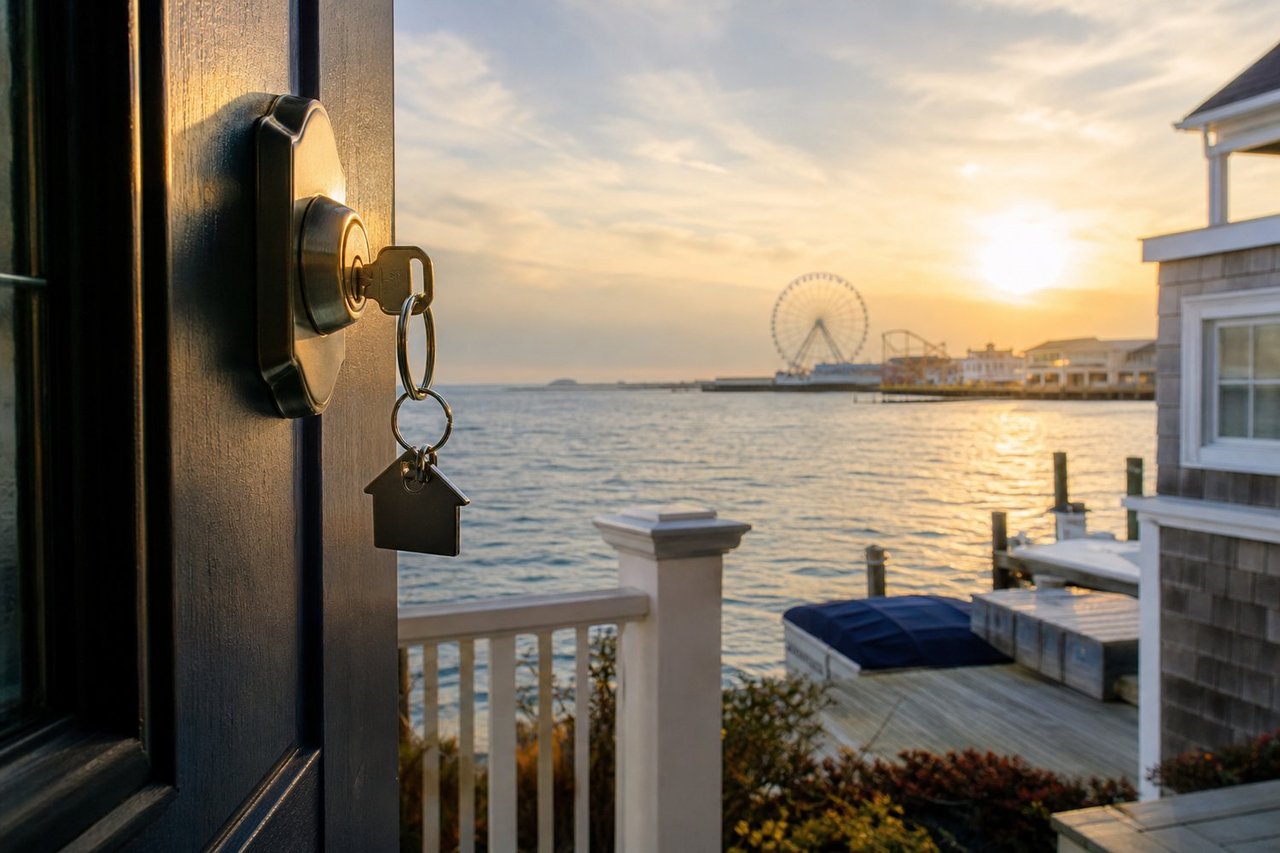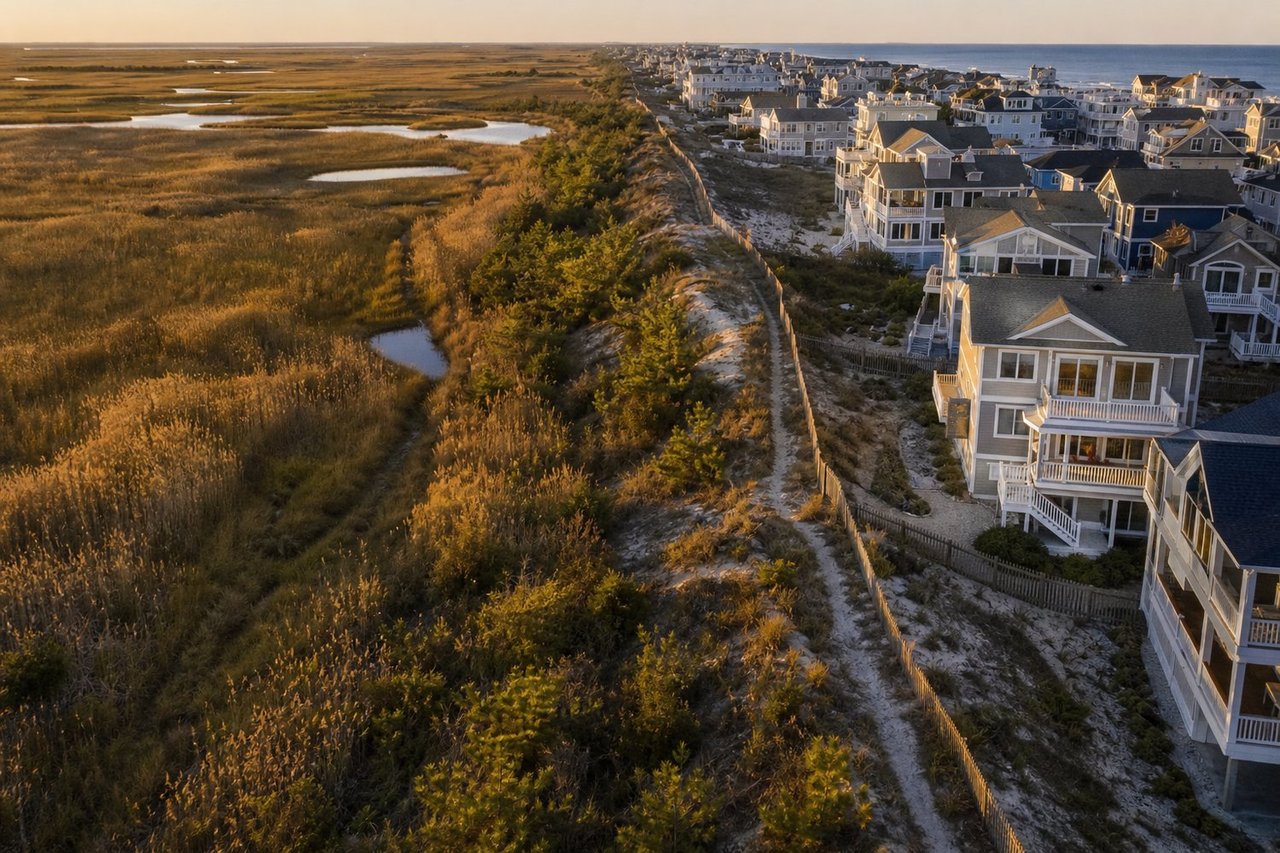
What should you weigh before buying a bayfront home in Ocean City?
Buying a bayfront home in Ocean City means weighing more than the view: the type of frontage, the condition of the bulkhead and dock, how the water behaves at different tides, and how the specific parcel handles flooding. The bay side can offer a calmer, sunset-oriented outlook compared with the ocean side, but it also comes with waterfront structures to maintain and a tide-driven relationship with your property. The right home is the one that fits the time you'll actually spend at the shore.
Key Takeaways
- Bayfront in Ocean City is not one uniform setting, because open-bay, lagoon, and bulkheaded frontage differ in wind exposure, wake activity, boat maneuverability, and upkeep.
- The city states that the entire island lies within a floodplain and that flooding can come from both ocean and bay waters, so flood review has to be done for the exact address.
- A standard home inspection does not tell you whether the bulkhead, dock, lift, or ramp is sound or usable, so those structures need their own review.
- Marina and Waterfront Park at Bay Avenue and 2nd Street (open 24 hours a day) and the Tennessee Avenue boat ramp give you public bayfront access without owning frontage.
- County-level figures from New Jersey REALTORS® do not isolate Ocean City bayfront, so bayfront value is a property-by-property comparison, not a single number.
How is a bayfront home in Ocean City different from an oceanfront home?
A bayfront home faces the back bay instead of the Atlantic, so your relationship with the water is quieter, more boat-oriented, and often tied to sunset views. The tradeoff is that you take on exposure and upkeep that look very different from the beach side. I walk buyers through this comparison early, because the two settings solve different problems.
What kinds of bayfront can you actually buy?
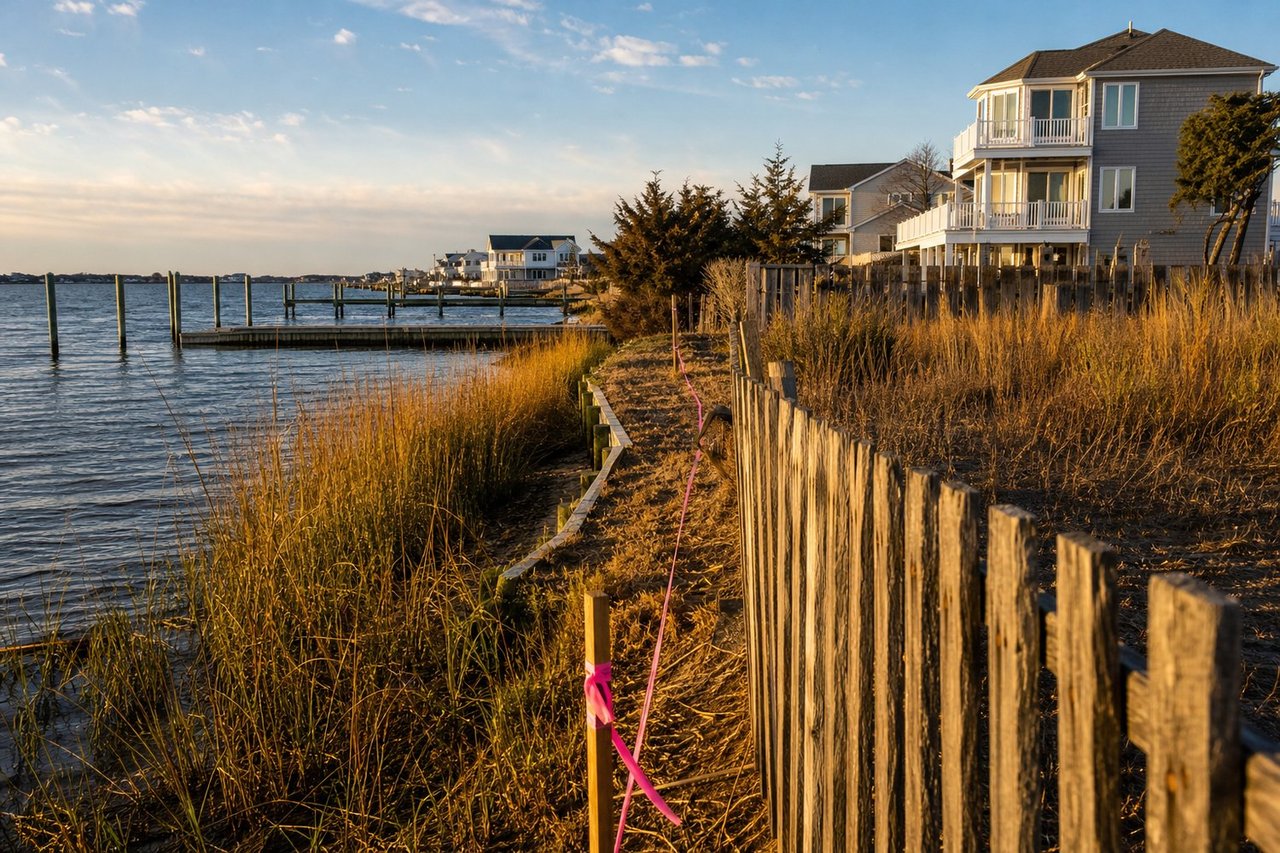
"Bayfront" in a listing can mean several different physical settings. A property may face open bay water, a lagoon, a creek-like channel, or a bulkheaded edge. The city's municipal public access plan describes the bayfront and numerous lagoons as bulkheaded from the north end of the island to 36th Street, so the waterfront edge you're buying is often a built structure, not a natural shoreline.
Those differences change daily life in practical ways:
- Wind exposure: open water feels different from a protected lagoon.
- Wake activity: boat traffic affects docks, lifts, and bulkheads differently depending on location.
- Boat maneuverability: channel width, depth, and turning room vary by property.
- Sunset orientation: the direction the home and deck face shapes the outlook.
Is a bayfront home more vulnerable to flooding than an oceanfront home?
It isn't a simple yes or no, because both sides of the island carry flood exposure. The City of Ocean City states that the entire island lies within a floodplain and that flooding can occur from ocean and bay waters during hurricanes and high-tide storms. That makes your parcel's elevation, flood zone, and flood history more important than the word "bayfront" on the listing.
The New Jersey Department of Environmental Protection also notes that properties near a flood zone or in communities that have flooded before can face serious risk. Its mapping tool includes historical flooding and Climate Adjusted Flood Elevation information for coastal flood-hazard areas.
Tide timing is a real-world example. On November 24, 2026, the city reported a National Weather Service Coastal Flood Watch for November 26 and 27, with predicted "major" tidal flooding on the bay side near the Ninth Street Bridge around high tide. That's a dated weather event, not a permanent risk estimate. It does show why you should ask whether you can reach the driveway, garage, and home when the bay is high.
For a deeper look at how flood exposure shapes insurance decisions, read my post on getting an Ocean City waterfront home flood quote before you buy.
What does weighing more than the view look like at the waterfront itself?
It means evaluating the waterfront structures and water access as their own line items, separate from the house. A home that looks great inside doesn't tell you whether the bulkhead, dock, or water route works. I coach buyers to treat the house and the waterfront as two inspections.
What should you have reviewed before you buy?
A local inspection should look at the bulkhead or seawall, the cap, pilings, dock, lift, ramp, steps, shore protection, drainage, and any visible settlement. Here's how I organize the questions:
Item | What to verify | Why it matters |
|---|---|---|
Frontage type | Open bay, lagoon, channel, or bulkheaded edge | Sets exposure, wake, and maneuverability |
Bulkhead or seawall | Cap, pilings, settlement, drainage behind it | The edge of your lot is a structure you maintain |
Dock, lift, ramp | Condition and whether it is usable as described | A listing mention doesn't prove it works |
Water route | Depth, shoaling, channel shape, bridge clearance at different tides | Determines whether you can actually get to open water |
Elevation and access | Finished floor, equipment, garage, driveway, emergency access | Shows how the parcel handles high-tide and storm conditions |
If you want a fuller walk-through, my Ocean City bayfront home checklist for buyers goes item by item.
Can you kayak, fish, or launch a boat from the property?
Possibly, but verify it at the property and at more than one tide stage. The city says its public Tennessee Avenue boat ramp has adequate depth at low tide, but a private frontage can have different depth, channel geometry, shoaling, bridge clearance, and access constraints. Don't rely on a listing description when your plans depend on getting out on the water.
This is exactly where a buyer benefits from local eyes. Weighing more than the view often comes down to someone walking the property with you at the right time, not reading the listing in the evening.
How does a bayfront setting fit the time you plan to spend at the shore?
The best fit depends on how you'll use the home, and daily access matters as much as the outlook. A bayfront property rewards owners who will spend real time on the deck, the dock, or the water. It asks more of owners who plan short visits and want little to manage.
What questions should you ask about how you'll use it?
- Will you arrive during storms or high tides, and can vehicles reach the property when the bay is flooding?
- How much of your time will be spent outdoors or on the water, as opposed to inside?
- Does the home's layout support the way you want to use it?
- Are you comfortable owning and maintaining bulkhead, dock, and shoreline structures?
In my experience, buyers here are making a lifestyle purchase, not building a spreadsheet. The right location and fit matter far more than chasing the lowest price, so I'd rather you picture your mornings and weekends first and then test the property against that picture.
Do you need private frontage to enjoy the bay?
Not always. The municipal plan identifies Marina and Waterfront Park, at Bay Avenue and 2nd Street, as publicly owned bayfront access that is open 24 hours a day, seven days a week. Combined with the public boat ramp at Tennessee Avenue, a buyer who loves boating or fishing can get much of that lifestyle without accepting the maintenance and exposure of private frontage.
That doesn't make private frontage the wrong choice. It means you should know what you're paying for, and whether the frontage will get used enough to justify it. If you're comparing options, my post on why buyers choose Ocean City waterfront homes covers the broader picture.
What do current market figures tell you about bayfront?
Less than you'd think. New Jersey REALTORS® publishes a Cape May County Local Market Update, with an October 2026 edition, and it's a far better source for county-level statistics than a consumer portal. It doesn't isolate Ocean City bayfront, though, and bayfront pricing varies with frontage type, protected versus open exposure, dock and bulkhead condition, elevation, parking, views, and whether the property supports your intended waterfront use. Your number comes from comparable properties and a close look at the specific home, which is the analysis I run with my clients.
The flood side of that analysis matters just as much. The NJDEP flood-risk tool and the city's flood hazard information are good starting points, and we can go through the exact address together.
If you'd like to hear how past clients felt about working with me, you can read reviews on Google, Zillow, and Realtor.com.
FAQ
Is a bayfront home in Ocean City more vulnerable to flooding than an oceanfront home?
Neither side is automatically safe, because the city says the entire island lies within a floodplain and flooding can come from ocean and bay waters. The practical answer comes from the exact parcel: its elevation, flood zone, flood history, drainage, and emergency access. I go through that review with buyers before they get attached to a property.
Do bayfront homes in Ocean City have private docks or bulkheads?
Many do have bulkheads, since the municipal plan describes the bayfront and lagoons as bulkheaded from the north end of the island to 36th Street. Whether a given property has a dock, lift, or ramp is specific to that property. Have each structure inspected and confirm it is sound and usable as described, because the house's condition doesn't tell you that.
Can I kayak, fish, or launch a boat from an Ocean City bayfront property?
It depends on the frontage and the water in front of it. Depth, shoaling, channel shape, and bridge clearance can change at different tide stages, so verify the route to open water instead of relying on the listing. If private launching isn't practical, the public Tennessee Avenue boat ramp is a city-maintained alternative.
What is the difference between open-bay frontage and lagoon frontage?
Open-bay frontage faces larger water, while lagoon frontage sits on a more enclosed channel. Wind exposure, wake activity, boat maneuverability, and shoreline upkeep can differ substantially between the two. The best way to compare them is to see each property in person and talk through how you plan to use the water.
Is a bayfront home a better fit for year-round living, vacation use, or seasonal rental use?
It can work for each, so the better question is how much time you'll spend there and how much waterfront upkeep you want to manage. A part-time owner should think hard about tide-related access and storm-season arrivals. If you're considering renting the home, confirm the municipal requirements before you buy and don't build your plan around rental income.
Where should you go from here?
Weighing more than the view is how you end up with a bayfront home you'll enjoy for years: the right frontage, a sound bulkhead, workable water access, and a clear picture of flood exposure at the exact address. If you're deciding whether bayfront or another waterfront setting fits the life you want at the shore, I'd be glad to walk you through it. Contact me at [email protected], or watch the show to see how the Saltwater Living Team approaches coastal real estate.
Equal Housing Opportunity. Christopher Oliva, Broker/Salesperson, licensed in New Jersey and regulated by the New Jersey Real Estate Commission (NJREC). This article is general information, not legal, tax, or financial advice. Confirm your own numbers and requirements with your title company, tax advisor, or lender.