Should you waive the home inspection on a Shore-Area Offer?
In most cases, I'd push you to avoid a full waiver on a Shore-Area Offer. Coastal homes can hide moisture, roof, drainage, and mechanical problems that a seller's price never reflects, and once you waive, those costs are yours. The right answer depends on the property, the contract language, and how much unplanned repair spending you can absorb, so treat this as a risk decision and not a bidding trick.
Key Takeaways
- A full waiver strengthens how your offer looks, but it removes your ability to negotiate or walk away based on what the home's condition turns out to be.
- An informational-only inspection or a shortened inspection window can keep you informed while still presenting a cleaner offer, depending on how the contract is written.
- Older shore homes, crawl spaces or basements, visible moisture signs, low-lying lots, and unknown storm or flood history all raise the stakes of waiving.
- New Jersey REALTORS® publishes a Buyer's Waiver of Inspection and/or Appraisal form, and your attorney should review any waiver or inspection addendum before you're committed.
- If your cash reserves can't cover a surprise roof, drainage, or system repair, waiving is the wrong move no matter how competitive the market feels.
What does waiving the inspection on a Shore-Area Offer actually mean?
It means you give up some or all of your contractual right to act on what an inspection finds. The details vary a lot, and "waive the inspection" can describe several different contract structures with very different risk.
New Jersey REALTORS® addresses this directly with its Buyer's Waiver of Inspection and/or Appraisal form. Its stated purpose includes documenting that a buyer chose to waive an inspection, appraisal, or another contingency or right, including the risks tied to property conditions an inspection could have revealed. That language matters. It tells you the paperwork is built to record that you accepted the unknowns.
The options on the table
Here's how I lay out the common approaches when a buyer asks me about strengthening a Shore-Area Offer. The exact rights you keep always come from your signed contract, not from the label.
Approach | What you give up | What you keep | Fits best when |
|---|---|---|---|
Full waiver | Your ability to negotiate repairs or exit based on inspection findings | Little contractual protection on condition | The home is newer, low-risk, well documented, and you hold strong cash reserves |
Informational-only inspection | Typically, repair requests (depends on contract wording) | Knowledge of the home's condition before you close | You want a cleaner offer but still want to know what you own and budget for it |
Shortened inspection window | Extra time to schedule specialists and negotiate | Your contingency rights within the window | The home looks sound and you can line up the inspector quickly |
Standard inspection contingency | Some of the offer's competitive edge | Full ability to negotiate repairs or walk, per the contract | The home is older, has visible concerns, or has unclear storm history |
Is an informational-only inspection safer than a full waiver?
Yes, it's safer, because you still learn what you're buying. You may not be able to ask the seller for repairs, but you can decide before closing whether the home still fits your budget, and your attorney can tell you what your contract lets you do with that information. If you're weighing a few ways to make a bid stronger without going all-in, my breakdown of a competitive NJ shore offer without taking unnecessary risk covers the other levers.
What can go wrong when you waive inspection on a shore home?
The biggest risks are moisture intrusion, roof and exterior wear, drainage problems, and aging systems, all of which coastal conditions can speed up. A seller's disclosure or a pleasant showing won't reliably surface any of them.
Moisture, crawl spaces, and basements
Salt air, humidity, and shifting water tables are hard on the lower levels of a home. Staining, musty odors, soft wood, or damp insulation can point to a leak or ventilation issue that gets expensive once it's behind finished surfaces. A crawl space or basement raises the stakes because you can't see most of it during a walk-through.
Roof, exterior, and salt-air wear
Wind, sun, and salt take a toll on roofing, siding, railings, decks, windows, and metal fasteners. A general inspection typically gives you a visual read on condition and remaining life, which is exactly the information you lose with a full waiver. A roof or deck replacement is a major, unplanned expense, and you can't plan around it if you never learn it's coming.
Drainage and low-lying lots
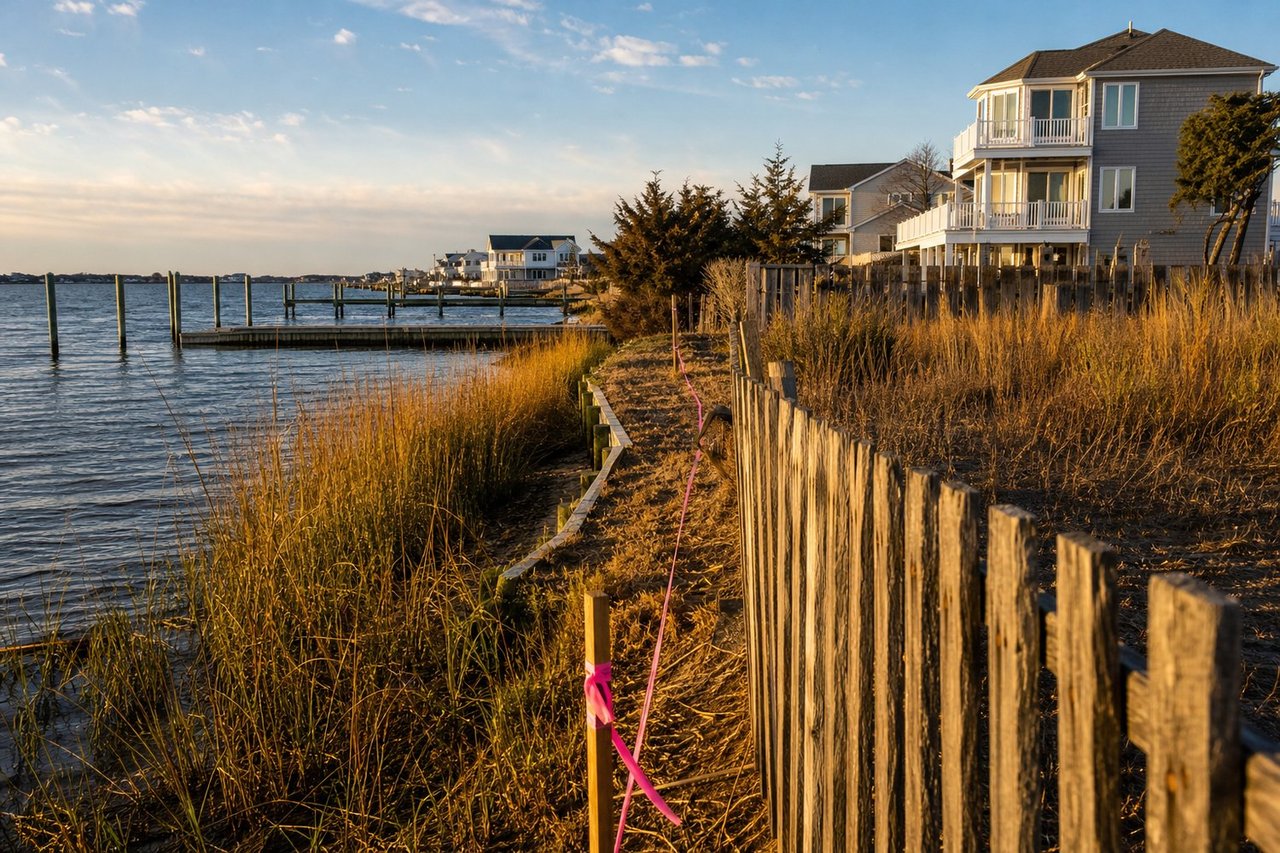
Where water goes after a heavy rain matters as much as what the house looks like. Grading, downspouts, sump arrangements, and lot elevation all affect how a property handles water. A bayfront or low-lying property deserves extra scrutiny, and I cover what to look at in my Ocean City bayfront home checklist for buyers.
Mechanical systems and storm history
HVAC, water heaters, electrical panels, and plumbing age quickly in coastal conditions. Past storm or flood damage is another unknown: a home can look freshly updated and still carry a history you can't see. If you can't get complete information about prior damage, that alone is a reason to keep your inspection rights.
How do you decide whether to waive on a Shore-Area Offer?
Decide based on three things: the property's risk profile, your financial cushion, and what your contract actually says. If any of the three is weak, keep your inspection protection, even if that means a less aggressive bid.
Questions to answer before you decide
- Could you absorb a major repair? If a surprise roof, drainage, or system bill would strain you, a waiver isn't worth the edge it gives you.
- How old is the home, and what's underneath it? Older homes and properties with crawl spaces or basements carry more hidden risk.
- Are there visible warning signs? Moisture stains, odors, sagging, or deferred maintenance should slow you down.
- Is the location low-lying or exposed? Water and wind exposure raise the cost of being wrong.
- Do you have the storm and flood history? If the answer is incomplete, treat that as a risk, not a detail.
These are risk-assessment questions, not a replacement for a property-specific inspection. They help you decide whether the home is one where going without an inspection could ever make sense.
Smarter ways to compete without a full waiver
- Shorten the window. Line up your inspector and any specialists before you write, so you can move fast.
- Go informational-only. Tell the seller you're not asking for repairs, if the contract and your reserves support that.
- Do a pre-offer walk-through. Bring a qualified inspector or contractor to a showing if the seller allows it.
- Strengthen other terms. Price, timing, and flexibility can carry weight without your giving up condition protection. My guide to comparing multiple offers on a coastal South Jersey home shows how sellers weigh those terms.
Get the paperwork reviewed first
The consequences of any waiver, limitation, deadline, or inspection addendum turn on the signed contract and related documents. Have your attorney review them before you're committed, and read the New Jersey REALTORS® waiver form language so you know what you're acknowledging. Buying at the shore is a lifestyle decision, and I want your first summer in the home to be about the beach, not a drainage repair you could have seen coming.
Every house and every contract is different, and the only way to know where you stand is to look at your specific property and your reserves. That's the kind of conversation I have with buyers before we ever write the offer.
If you'd like to see how other buyers and sellers have felt working with me, you can read my reviews on Google, Zillow, and Realtor.com.
FAQ
Should I waive the home inspection to win a shore-area house in New Jersey?
Usually not a full waiver, unless the home is low-risk and you can comfortably absorb surprise repairs. A waiver can make your offer look stronger, but it leaves you holding any moisture, roof, drainage, or system problem. Weigh the property's age, location, and visible condition against your reserves before deciding.
What can go wrong if I buy a Jersey Shore home without an inspection?
You can inherit costly problems you never saw, such as hidden moisture, roof wear, drainage issues, or failing systems. Because you've waived your rights, you may have little ability to ask for repairs or exit the deal. The risk is larger for older homes, lower levels, and properties with unclear storm history.
Can I waive repairs but still have a home inspection in New Jersey?
Yes, that structure is commonly called an informational-only inspection, though how it works depends on your contract wording. You typically keep the knowledge of the home's condition while giving up repair requests. Have your attorney review the exact language so you know whether you can still exit the contract.
Should I get a separate flood, mold, roof, or sewer inspection for a coastal home?
It depends on what the general inspection and the property's signs suggest. If the inspector flags moisture, roof wear, or drainage concerns, a specialist can give you a closer look. For flood exposure and coverage questions, speak with an insurance professional before you commit.
How much inspection time should I request in a South Jersey Shore offer?
Request enough time to schedule your inspector and any specialists and to review the findings with your attorney. A shorter window can make your offer more competitive, but only if you've lined up professionals in advance. I'll help you set a timeline that fits the property and the contract.
Does a home inspection find salt-air corrosion and drainage problems?
A general inspection typically flags visible signs of corrosion, staining, poor grading, and drainage concerns, since it's largely a visual review. It won't uncover everything behind walls or below ground. When the inspector sees warning signs, a specialist evaluation is the logical next step.
The bottom line is that a waived inspection buys you a stronger-looking offer at the cost of visibility into the home you're buying, and the shore's moisture and weather exposure make that trade a serious one. If you're sizing up a Shore-Area Offer, I'll walk you through the property, the contract terms, and the options that protect you without costing you the house. Reach me at [email protected], or watch the show for more on buying at the shore.
Equal Housing Opportunity. Christopher Oliva, Broker/Salesperson, licensed in New Jersey and regulated by the New Jersey Real Estate Commission (NJREC). This article is general information, not legal, tax, or financial advice. Confirm your own situation with your attorney, title company, tax advisor, or lender.